Clinical VR session companion · iPadOS
VR4GOOD Clinician
An iPad control interface designed to help clinicians prepare patients, configure personalised immersive environments and supervise structured VR sessions.
The problem
Why this product needed to exist.
A supervised clinical VR session involves more than launching an experience. The clinician needs a clear operational view of the patient, the selected environment, sensory preferences, session controls and safety indicators without being overloaded by the headset interface itself.
The product response
Architecture led by the workflow.
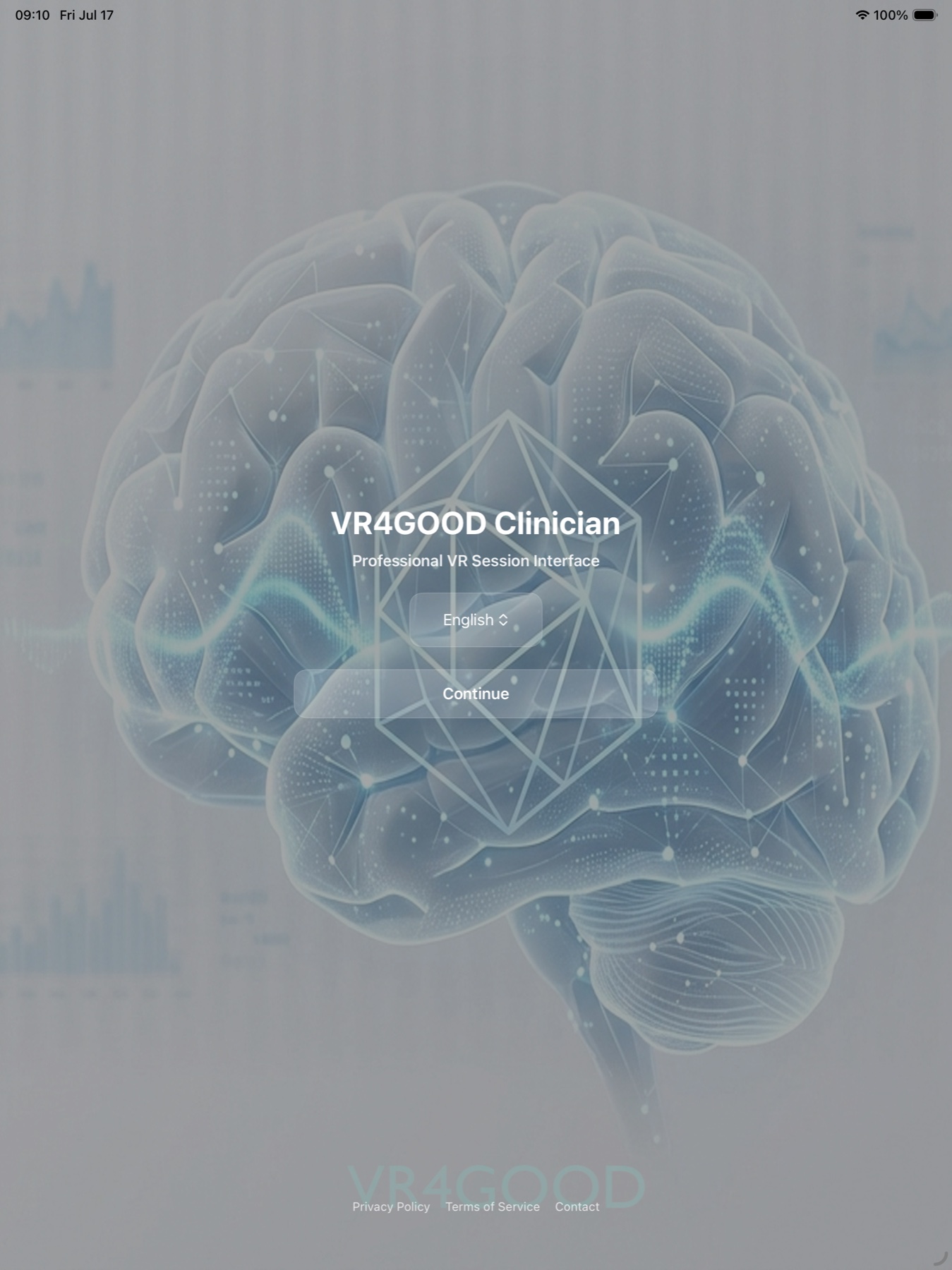
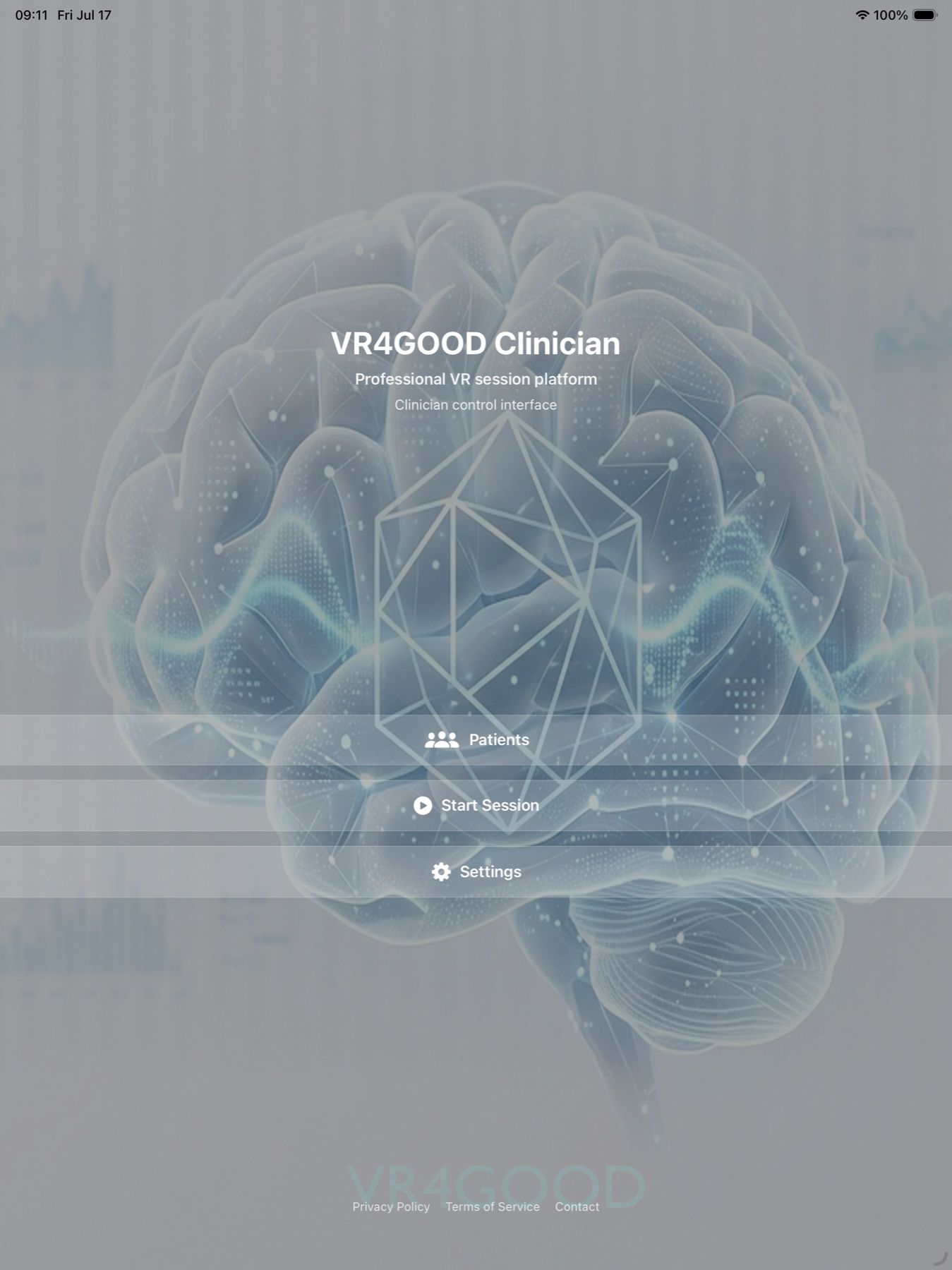
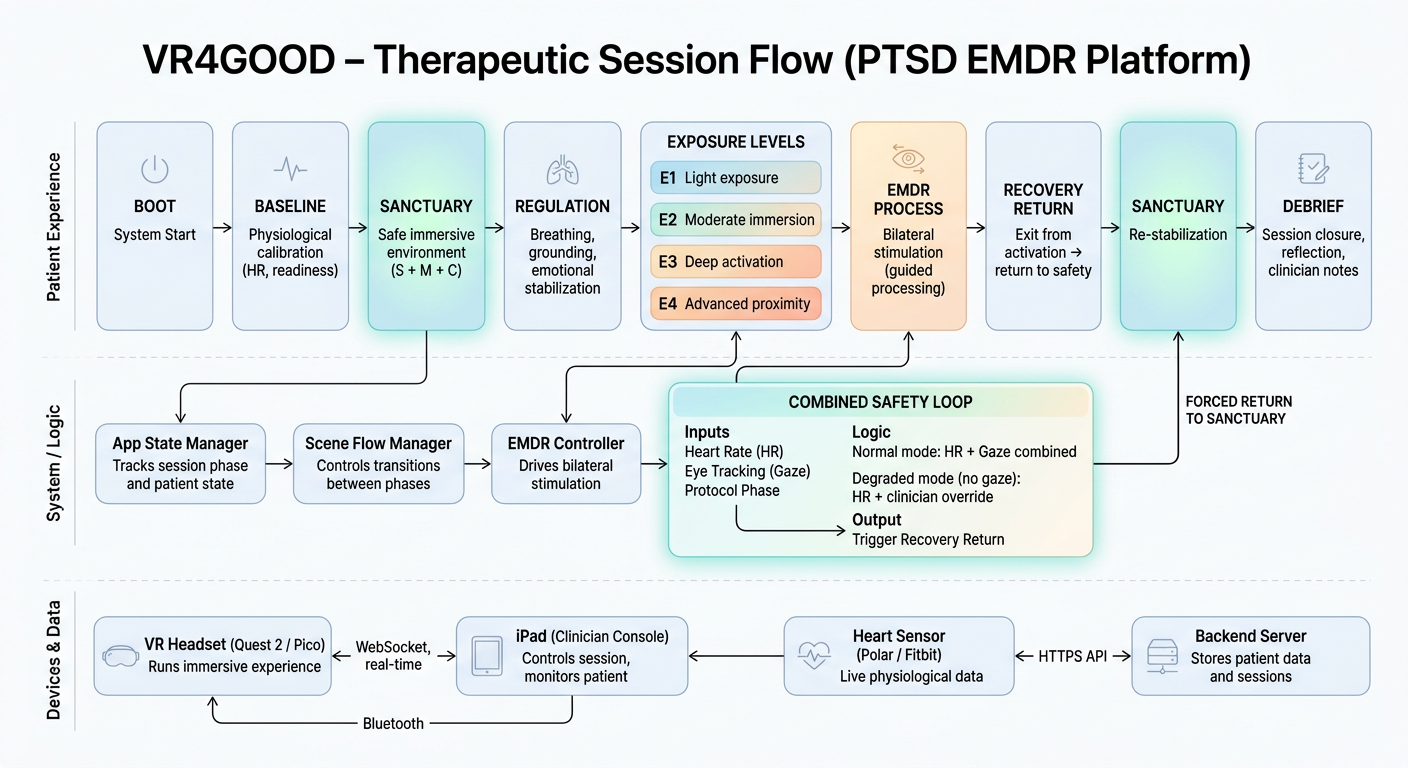
VR4GOOD Clinician separates the professional control layer from the immersive patient experience. The working iPad prototype provides bilingual entry, patient profiles, personalised “sanctuary” configuration, sensor preparation and session controls. A separate Unity blueprint defines the proposed Quest 2 runtime, modular scenes, sensor-provider interface and clinician-supervised return-to-safety logic.
Prototype interface
A clear clinical console designed for iPad.
Technical blueprint
A supervised journey with an explicit return to safety.
Our team’s role
Responsibility from strategy to execution.
Important decisions
The choices that make the system coherent.
- Keep the clinician in control of session start, pause and stop actions.
- Separate patient preparation, environment configuration and live monitoring into clear stages.
- Treat sensor readings and safety states as supervised indicators, not automated clinical decisions.
- Present the product as a prototype requiring clinical, privacy and regulatory validation before care use.
Technology & disciplines
Honest outcome
What this project proves today.
The prototype demonstrates a coherent clinician-side workflow for personalised and supervised VR sessions on iPad. It is product-development evidence, not evidence of therapeutic effectiveness, and it is not presented as a certified medical device or a replacement for clinical judgement.
Related problem